
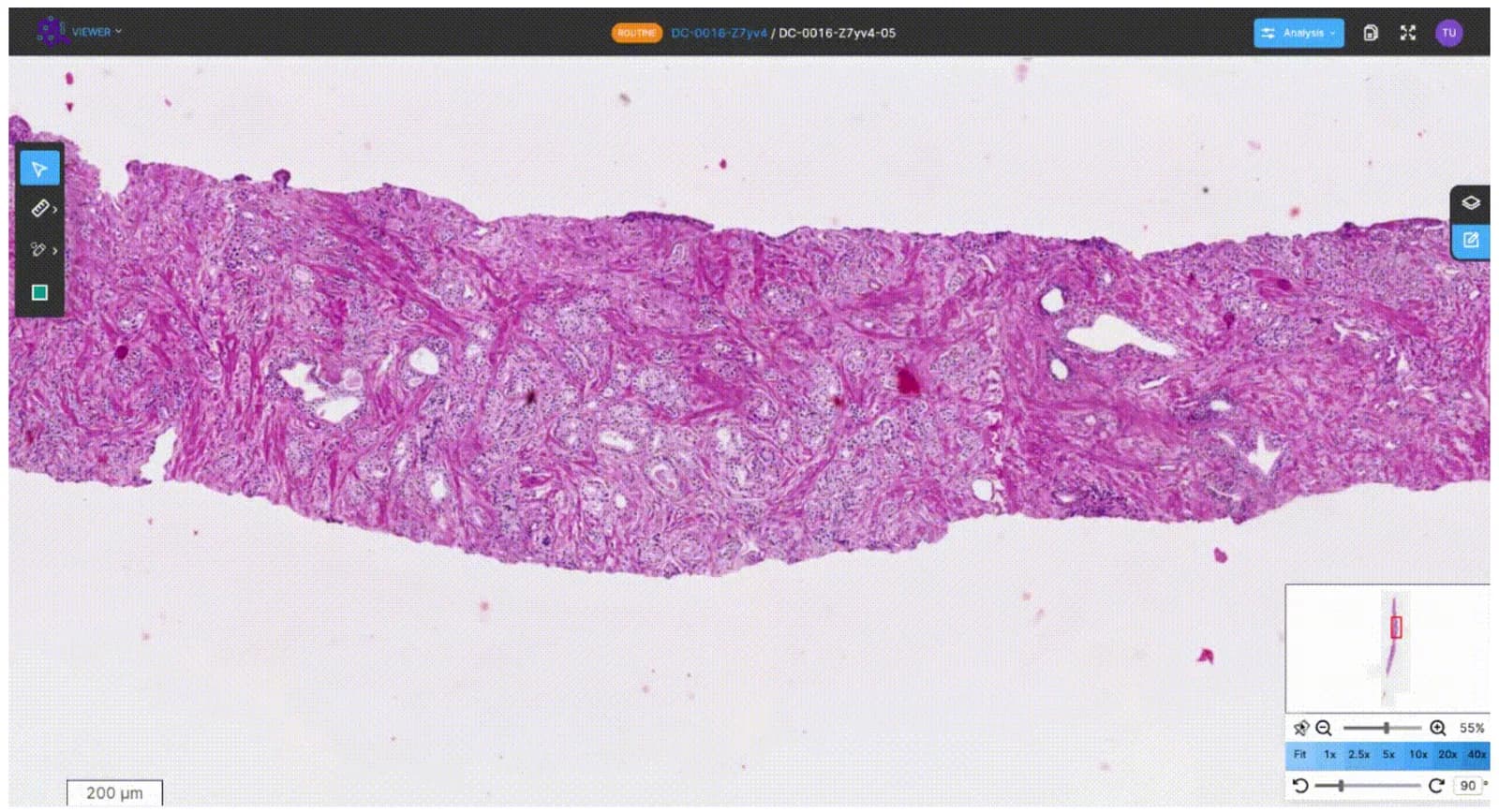
Qritive's AI helps cancer labs screen, prioritize and report cases faster and more consistently. Idealite supported the platform with web development.
{ Project Overview }
About the Project
Qritive is a Singapore-based digital-pathology company, with operations in the US and India, whose software helps pathologists diagnose cancer from digitized tissue slides. In 2024 it signed multi-year contracts with Indian diagnostic chains and a cancer institute. The company was founded to tackle slow turnaround times, inconsistent diagnoses and inefficient lab workflows, pressures that grow as biopsy volumes rise and specialist pathologists stay scarce. Its Pantheon workbench puts case management, slide viewing, AI analysis and structured reporting on one screen, with remote access for specialists wherever they are. QAi modules for prostate, colon, lymph node and biomarker scoring analyze slides ahead of review, so cases can be screened and prioritized before the pathologist decides. Pantheon is CE-marked, registered with Singapore's Health Sciences Authority, and works with the scanners and lab systems labs already own. Idealite contributed web application and integration engineering to the platform alongside Qritive's team; the AI models are Qritive's own.
- Industry
- Healthcare
- Services
Web App Development • System Integration
{ The Challenge }
Cancer Labs Need Faster, More Consistent Answers
Key Challenges
- Slow turnaround on cancer biopsy results
- Diagnoses vary from one pathologist to another
- Rising biopsy volumes, limited pathologist capacity
- Specialists hard to reach across distance
- Labs run mixed scanners and systems
{ Our Solution }
One AI-Assisted Workspace for Pathology Labs
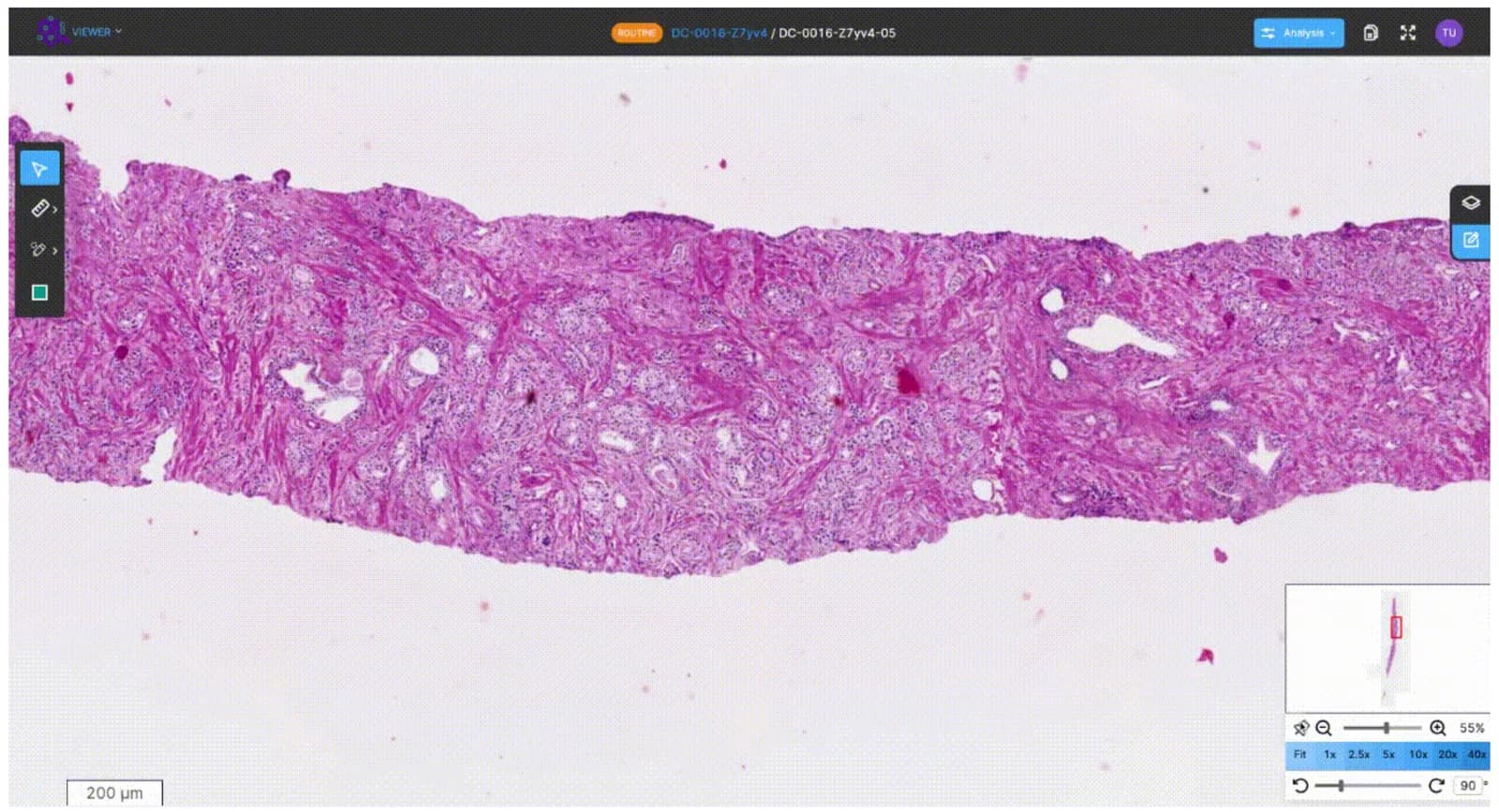
- AI case triage
- Cases, slides, reports together
- Explainable AI reports
- Remote specialist review
- Works with existing systems
{ How We Built It }
Development Process
How the Qritive engagement came together, step by step.
- 01
Learn the Workflow
Got to know how Qritive's platform serves pathologists and lab teams before contributing to it.
- 02
Web Application Work
Contributed web application development to the platform that pathologists and lab teams work in.
- 03
Integration Support
Helped connect the platform with the systems Qritive's customers already run, so labs can keep what they own.
- 04
Hand Over
Delivered the work into Qritive's own product and release process, so its team could carry it forward.
{ Results & Impact }
Delivering Business Value
Urgent Cases First
Pathologists start with the most urgent cases, flagged by AI screening.
Shared Grading Reference
Explainable AI summaries give every reader the same reference before sign-off.
Specialists Anywhere
Labs bring in remote pathologists on a case without shipping glass slides.
Keep Existing Systems
Labs add AI to the scanners and systems they already own.
Technical details
Requirements, architecture, development, testing and deployment notes.
Technical details
Requirements, architecture, development, testing and deployment notes.
Objectives
- Faster Turnaround: Help labs move cancer cases from scanned slide to signed report sooner.
- Consistent Diagnoses: Give pathologists explainable AI support so grading varies less from one reader to the next.
- Fit Existing Labs: Let labs adopt AI without replacing their scanners or their lab and hospital systems.
- Reach Across Distance: Let specialists review and discuss cases remotely, wherever they are based.
- Clinical-Grade Delivery: Contribute work that fits a platform held to medical-device and information-security standards.
Requirements
- Whole-slide image viewing for H&E and IHC tissue slides, with multi-level zoom, low-bandwidth viewing and DICOM support.
- Case management, annotation and structured reporting in one workbench.
- AI screening, triage and prioritization of cases before the pathologist's final review, with explainable summary reports.
- Remote access and telepathology for pathologists working in different locations.
- Integration with the LIS, EMR, HMS and PACS systems and the slide scanners labs already run.
- Platform context: Pantheon is CE-marked and a Singapore HSA Class A medical device, and Qritive holds ISO 13485 and ISO/IEC 27001 certification.
Architecture
- Qritive's platform-plus-plug-ins model: the Pantheon workbench hosts the QAi AI modules, which can also run inside third-party digital-pathology platforms.
- Vendor-agnostic deployment: Pantheon runs on-premise or in the cloud and connects to existing LIS, EMR, HMS and PACS systems.
Challenges & solutions
- Turnaround: biopsy volumes keep rising while pathologist capacity is limited. AI pre-screening and prioritization point pathologists' time at the cases that need it.
- Consistency: readers often disagree on grading, for example Gleason grading of prostate biopsies. Explainable AI summaries give every reader a shared case-level and region-level reference.
- Adoption: labs run a mix of scanners and lab systems. A vendor-agnostic platform lets them add AI without replacing hardware or software they already own.
- Trust: clinical buyers expect regulated, secure software, so contributed work has to fit a platform that is CE-marked, HSA-registered and run under Qritive's ISO 13485 and ISO/IEC 27001 certifications.
Outcomes
- Qritive's AI screens and prioritizes cases ahead of the pathologist's final review.
- Qritive's explainable summaries map benign and malignant tissue, with Gleason/ISUP grades at case and region level.
- Remote access and telepathology in Pantheon let specialists review cases from other locations.
- Pantheon is vendor-agnostic, runs on-premise or in the cloud, and connects to LIS, EMR, HMS and PACS systems.
Next case study
Helping Bartleby Be There When Students Get Stuck
{ Let's Build Together }
Let's build what's next
We partner with ambitious businesses to design, build and scale digital products that create lasting value.
Contact Us